TORQUE
Features
A Short History of the Station Wagon in America
Before the minivan, before the SUV, the family hauler had a different shape entirely — and a stranger origin than most people realize.
Before it was a station wagon, it was called a "depot hack" — and the name tells you almost everything about where the body style came from. In the early 1900s, wealthy estates and resort hotels needed a vehicle to haul guests and their luggage from the train depot to the main house. Early builders stripped a passenger chassis down to its frame, added a simple wooden bench-seat body with open sides, and called it a day. It was ugly, practical, and strictly utilitarian — nobody in 1910 imagined it would become a defining shape of American family life for the next sixty years.
The Woodie Era
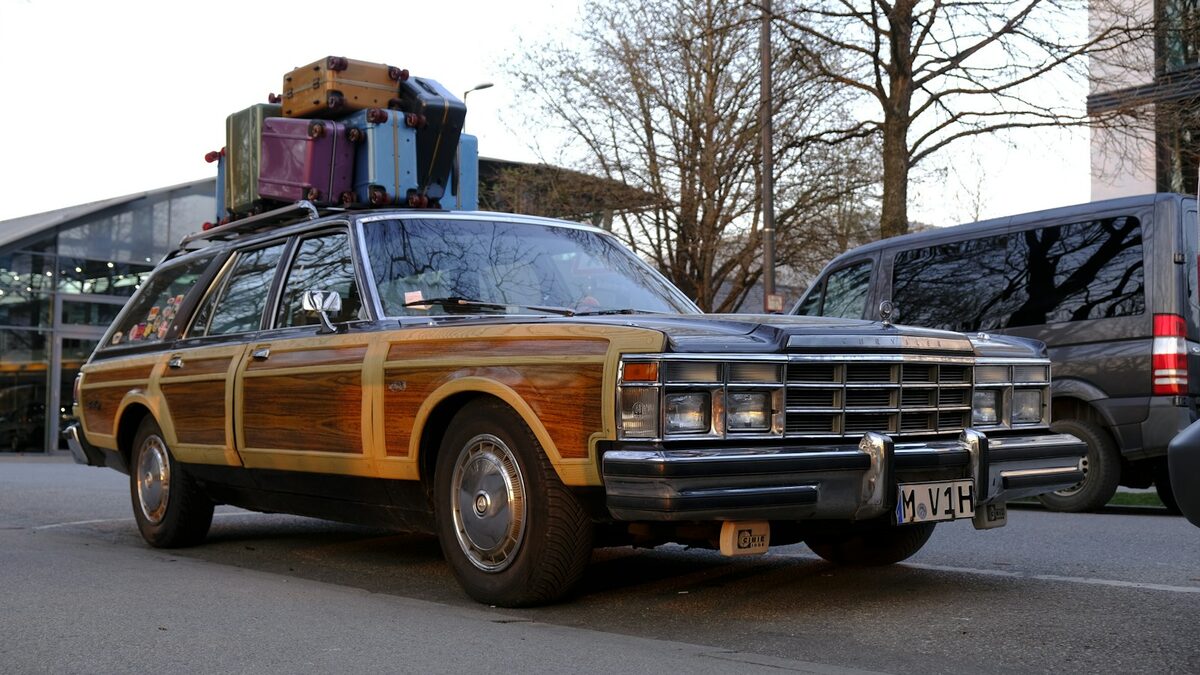
By the 1930s, those wooden depot-hack bodies had evolved into something closer to furniture on wheels. Companies like Ford, Chrysler, and a cottage industry of specialty coachbuilders began producing "woodie" wagons — bodies with real structural wood framing, typically ash or maple, panelled with mahogany or birch. They were beautiful and almost impossible to maintain: the wood swelled, cracked, and rotted in wet climates, and keeping a woodie's varnish presentable was practically a part-time job. Surfers and Southern California car culture adopted the woodie as an aesthetic icon in the 1950s and '60s largely because the cheap, aging wagons were what broke college kids could actually afford — not because anyone thought real wood bodywork was a good engineering decision.
Steel Bodies and the Suburban Boom
The real transformation came after World War II, when automakers figured out how to stamp wood-grain patterns directly into steel body panels — or print a convincing wood-look decal over a plain steel wagon body entirely. That single manufacturing shift mattered enormously: it meant a wagon no longer needed constant woodworking maintenance, which made the body style viable for the millions of new suburban families moving into postwar housing developments. The wagon became the default second car, and often the only car, for a generation raising kids in brand-new subdivisions far from a train depot.
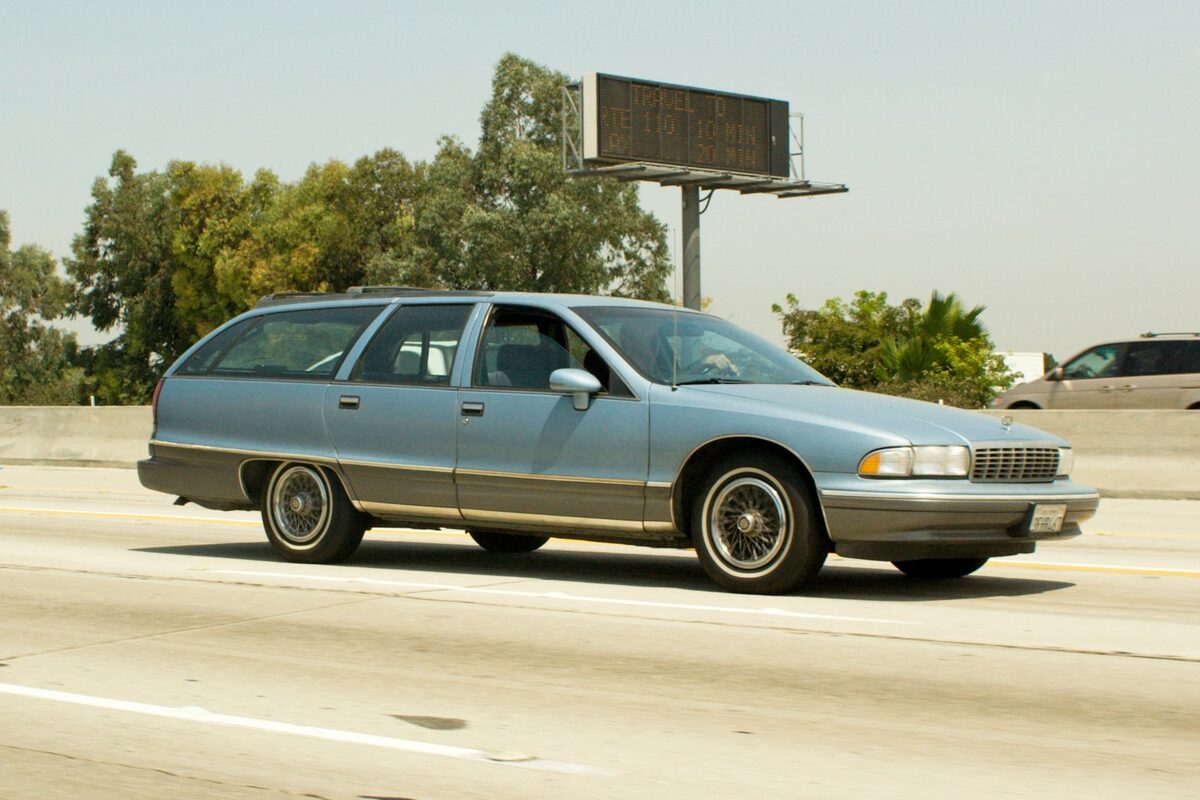
The Golden Age: Fins, Fake Wood, and Three Rows
The 1960s and '70s were the station wagon's absolute peak, in both volume and ambition. The Ford Country Squire, Chevrolet Kingswood, Buick Estate Wagon, and Plymouth Fury Suburban all competed on cargo volume, third-row seating, and simulated-wood decal patterns that got more elaborate every model year. Some, including various Chrysler and Ford wagons, offered a rear-facing third-row seat that folded up from the cargo floor — a feature generations of kids remember mainly for motion sickness and waving at the car behind them.
- Ford Country Squire — the longest-running and most iconic "woodie-look" wagon, built from 1950 to 1991
- Chevrolet Kingswood and Caprice Estate — GM's full-size family haulers, built on the same platform as its biggest sedans
- Buick Roadmaster Estate Wagon — one of the last true full-size American wagons, discontinued in 1996
- AMC Eagle Wagon — an early and underappreciated all-wheel-drive wagon, essentially the SUV crossover's direct ancestor
"The minivan didn't kill the station wagon by being better in every way. It killed it by solving the one problem wagons never fixed: getting a kid in and out of the third row without climbing over a seat." Rowan Pike, Staff Writer
Why the Minivan Killed It
Chrysler's 1984 minivan launch is usually credited as the wagon's killer, and the timeline backs that up: full-size wagon sales collapsed through the late 1980s as minivan sales climbed. The minivan offered sliding doors, flat-folding seats, and genuinely easier third-row access, all wrapped in a body that, crucially, didn't carry the station wagon's increasingly unfashionable "mom car" image by the mid-1980s. Wagons didn't disappear overnight, but by the early 1990s the segment had shrunk to a handful of models holding on mostly through brand loyalty.
Wagons on Screen
Pop culture cemented the wagon's image right as sales were starting to slide, which is part of why the association stuck so hard. The wood-paneled Family Truckster in 1983's "National Lampoon's Vacation" — built on a Ford LTD wagon chassis but exaggerated by the film's production designers into something more garish than anything Ford actually sold — became shorthand for suburban dad-car embarrassment for an entire generation of moviegoers. It's a strange legacy for a body style that, for most of its history, was simply the most practical and affordable way to move a family and their belongings.
The Wagon's Quiet Comeback
The body style never fully vanished. European brands kept wagons alive through the 1990s and 2000s as a smaller-footprint alternative to an SUV, and in the last decade, nameplates like the Subaru Outback and the current Volvo V60 and V90 Cross Country have proven there's still a real market for a wagon's lower center of gravity and easier parking compared to a tall crossover. It's a niche now, not a mainstream choice — but a century after the depot hack, the shape never fully disappeared from American roads.
Visit any classic car show today and the wagons draw a different crowd than the muscle cars parked next to them — fewer people chasing horsepower bragging rights, more people who remember riding in the way-back seat of a Country Squire on a summer road trip. That nostalgia has quietly pushed values on clean, original woodies and full-size wagons up faster than most other segments of the collector market over the past decade, which is its own kind of vindication for a body style that spent the 1990s being treated as a punchline.