TORQUE
Insurance
What a “Full Coverage” Policy Actually Covers
It's not a legal term and it's not one specific product. Insurers use it to describe a bundle of coverages. Here's what's actually in that bundle, and where the gaps are.
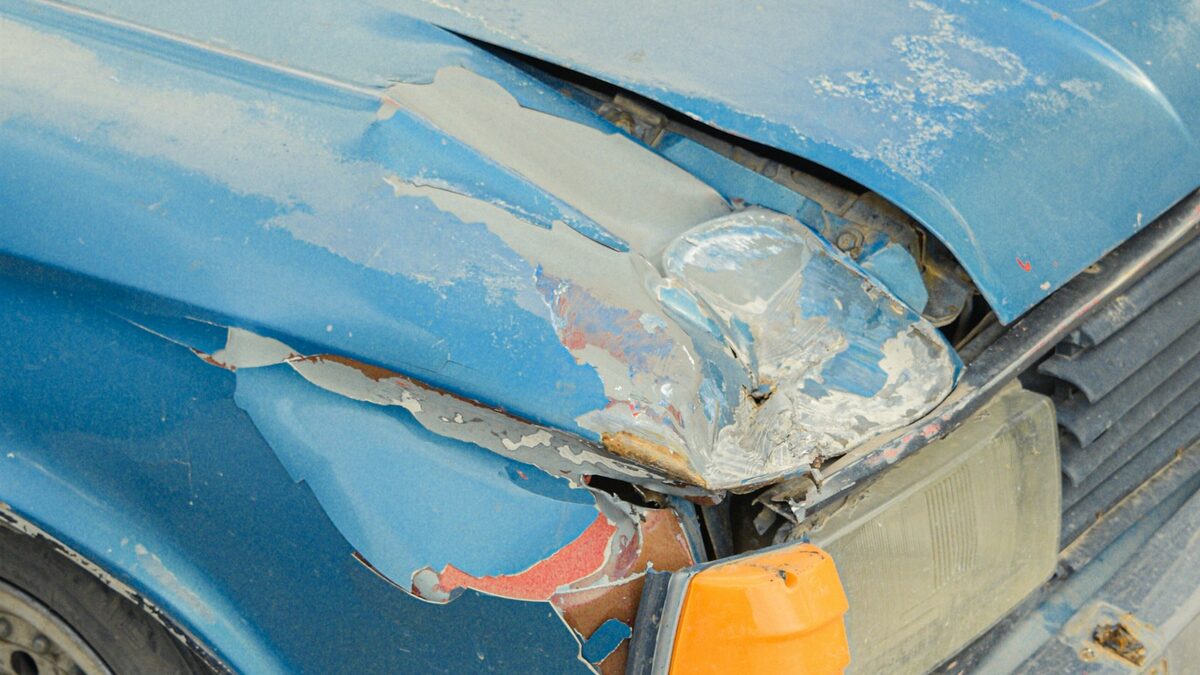
Ask an insurance agent for "full coverage" and they'll know roughly what you mean, but you won't find that phrase written into any policy document. It's industry shorthand for a bundle of coverages that, together, protect both other people and your own car — as opposed to a minimum liability-only policy, which only protects other people from damage you cause.
Understanding what's actually in that bundle matters, because "full coverage" is doing a lot of marketing work for a phrase that still leaves real gaps.
The Four Coverages That Make Up the Bundle
When someone says full coverage, they almost always mean these four coverages stacked together:
- Liability — pays for injuries and property damage you cause to others. Required in nearly every state.
- Collision — pays to repair or replace your own car after an accident, regardless of fault, minus your deductible.
- Comprehensive — covers non-collision damage to your car: theft, vandalism, hail, flooding, a deer strike, a tree branch.
- Uninsured/Underinsured Motorist — covers your injuries and sometimes your car if the other driver has no insurance, or not enough.
Any lender financing or leasing your car will require at minimum liability, collision, and comprehensive for as long as the loan is active — which is why "full coverage" is effectively mandatory on a new car loan, even though no state requires it by law.
What Full Coverage Does Not Cover
Despite the name, the standard bundle leaves several real gaps:
- Mechanical breakdowns and normal wear items — a blown transmission or a worn-out water pump is a warranty or repair-shop problem, not an insurance claim
- Your own medical bills beyond what Personal Injury Protection or Medical Payments coverage provides, if you didn't add those separately
- Rental car reimbursement while your car is in the shop, unless you added that coverage specifically
- The difference between what your car is worth and what you still owe on the loan, if it's totaled — that's a separate product entirely

Gap Insurance: The Coverage Nobody Bundles In
That last gap is the one that catches people off guard most often. If you financed a car with a small down payment, the loan balance can exceed the car's actual cash value for the first year or two — new cars commonly lose 20% of their value in the first twelve months. If the car is totaled during that window, standard comprehensive and collision coverage only pays out the car's current market value, not what you still owe. Gap insurance covers that difference, and it typically costs $20–$40 a year added to a policy, versus $400–$700 as a one-time dealer add-on at the time of purchase. If your loan-to-value ratio is high, it's worth asking your insurer to add it rather than buying it from the finance office.
"Full coverage protects the car. Gap insurance protects the loan. They are not the same thing, and most people only find that out after a total loss." Vanessa Kowal, Insurance Editor
How Your Deductible Changes the Premium
Collision and comprehensive both carry their own deductibles, and they don't have to match. Raising a $500 collision deductible to $1,000 typically lowers that portion of the premium by 10%–15%, because you're absorbing more of the risk on smaller claims yourself. It's a reasonable trade if you have $1,000 sitting in savings specifically for this purpose; it's a bad trade if raising the deductible just means you'd have to put a claim-triggering repair on a credit card instead. Comprehensive deductibles move the needle less, usually just 5%–8% per $500 increment, since comprehensive claims — hail, theft, a cracked windshield — tend to be smaller and more frequent than collision claims.
When Full Coverage Stops Making Sense
As a car ages and its value drops, the math behind carrying collision and comprehensive shifts. A common rule of thumb: if your annual premium for collision and comprehensive combined costs more than 10% of the car's current value, it may be time to drop those two coverages and keep only liability, banking the difference instead. A car worth $4,000 doesn't need $600 a year in collision coverage protecting it — the payout, minus your deductible, would barely cover a few months of premiums.
New Car vs. Older Car, Side by Side
The same "full coverage" label can mean very different things depending on what you're insuring. On a new car still under loan, the lender effectively dictates the floor: liability, collision, and comprehensive, usually with a deductible no higher than $1,000, because the lender has a financial stake in the car and wants it repaired, not written off cheaply. On a ten-year-old paid-off sedan, nothing requires you to carry any of that beyond state-mandated liability — the choice to keep collision and comprehensive at that point is purely a bet on whether the payout would be worth more than the premiums you'd pay to keep it in place.
Comparing What You Actually Have
If you're not sure which of the four coverages are on your current policy, your declarations page — the first page of your policy documents — lists each one by name along with its limit and deductible. It's worth pulling that page out once a year, particularly after a loan payoff or a significant drop in your car's value, to check whether the coverage still matches what you actually need.